

Product labelling and packaging have many roles to play. Packaging must securely contain and hold a variety of different products of different shapes, sizes and content. Packaging requires careful thought and consideration to ensure products can be transported from the manufacturer and distribution centre to the retailer, sometimes over great distances. Labelling and label accuracy are essential; informational content applied to the package should ensure that products are directed to where they need to be. On-product labelling is an essential marketing tool, which provides informational content, as well as perhaps QR and bar coding.
Sustainability and the development of eco packaging materials and processes that meet circularity requirements garner much attention, and so they should. However, waste, whether generated within the converting environment or elsewhere, impacts on process feasibility and profitability. Protective and decorative coatings make items such as food and beverage packaging more presentable and easier to market. Items sitting on a shelf and not sold translate into lost revenue for the retailer and the product manager alike. Goods not sold may end their life in a landfill.
Highly functional coatings
Coatings do more of course than look good; they are often highly functional. Adhesives coated onto carton flaps seal openings and flap ends. Peel-back and resealable films for deli meats and cheese slices minimise food waste by enabling the consumer to take out what is needed.
Coatings applied to flexible papers and films provide foods and other items with barrier-resistant properties to prevent spoilage due to moisture, gases, water vapour, grease and oils and microbial contaminants. Some barriers are not there to exclude but to keep properties such as aroma and freshness in, for example, coffee.
Selecting the most suitable packaging medium is often far from straightforward. Fruit, particularly tropical and soft fruits have different shelf lives. Fruit and vegetables have high water content; they bruise easily and are subject to an endogenous and degenerative process called senescence. In effect, they breathe and respire. Senescence cannot be stopped, but various coated and treated packaging technologies and fast farm-to-plate, pick, pack, and speedy distribution systems may minimise food waste.
Effectiveness of packaging strategies
Time, distance and other circumstances, including the type of item being labelled or packed, can influence the effectiveness of many packaging strategies.
Large losses from farm-to-plate are of great concern for producers, investors, brand owners, retailers and for organisations tasked with evaluating food and beverage production and losses on a global basis, such as for example, the UN and other organisations.
Waste is one of the biggest enemies of profit. Inconsistencies resulting in product throwaway can occur not only in the converting environment but at every processing point up to and including retail shelf display.
Barriers’ surface coated or applied to flexible films and papers for flexible packaging are generally considered passive. So-called active packaging, on the other hand, is an essentially dynamic concept whereby materials, coatings and laminates provide controlled responses, for example, to changing environmental conditions.
Some of the developments that have so far taken place in active packaging include carbon dioxide absorbers, ethylene removers and aroma emitters. The latter is used to great effect in fresh-packed salad bags.
Selectively altering the permeation of packaging materials
Technologists are able to selectively alter the permeation of packaging materials through a variety of means using coating, polymer blending, lamination, micro-perforation and co-extrusion. Active packaging modifies the concentration of gaseous compounds inside a pack relative to the oxidation or respiration kinetics of a given food.
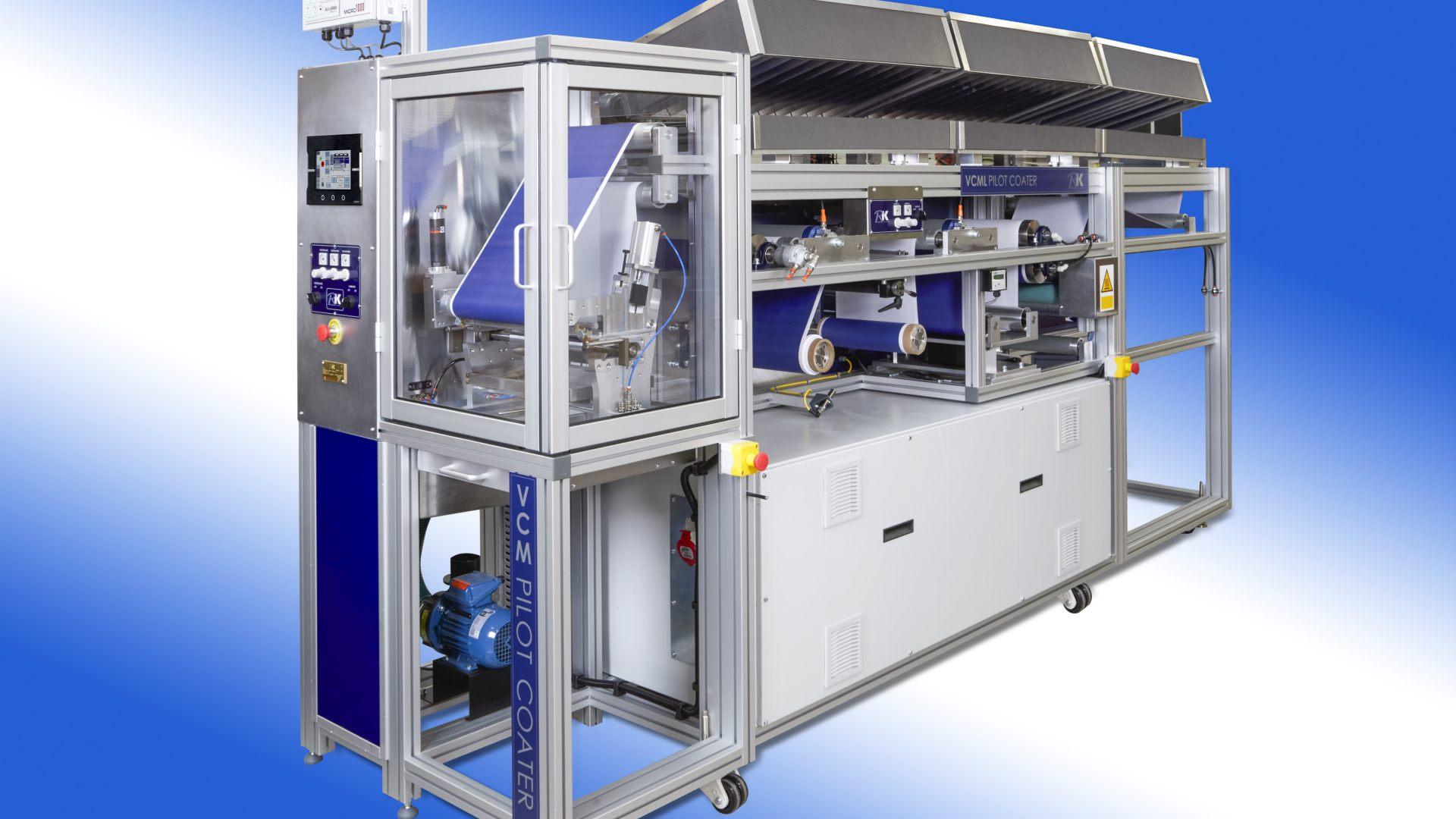
Development in packaging materials and technologies is very much ongoing as mono PE and PP, bio-based, lipid and starch-based materials, together with cellulose/lignin-based materials and other chemistries become available. Track and trace and smart technologies are evolving; AI possibilities and innovations in printing, converting and packaging technologies point to interesting times. Considerable R &.D effort, not to mention trialling under real-world conditions using various product development, trialling and monitoring devices and systems are as ever important. Narrow web pilot coating systems, such as the VCML, are configurable and offer selectable coating and print/laminating technologies, and are capable of small-scale production.
Written by Tom Kerchiss, Chairman of RK Print Coat Instruments Ltd.