

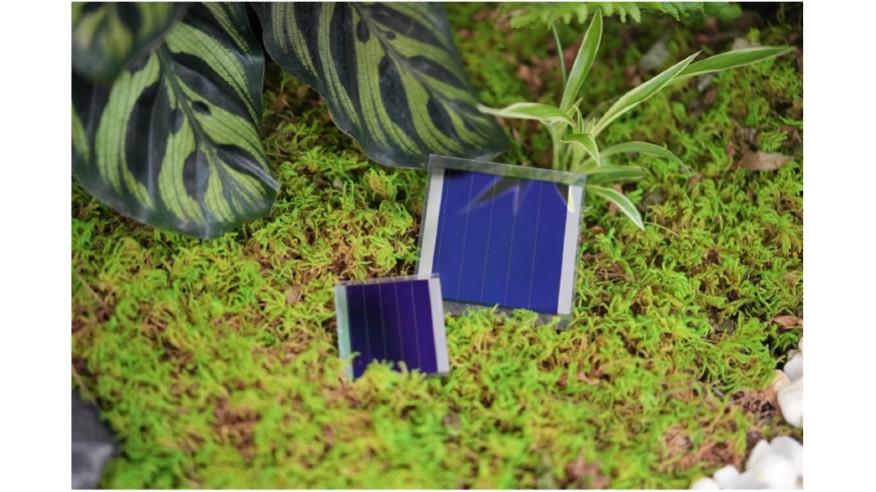
Chinese organic photovoltaics (OPV) manufacturer ChasingLight Technology has officially launched a commercially ready line of indoor PV products. The portfolio includes a diverse range of ambient-light-powered devices, such as environmental sensors, asset tracking tags, smart ear tags, electronic displays, electronic shelf labels (ESLs), electronic table cards, remote controls, night lights, graphics tablets and stylus pens.
Integration into various end-products
“We launched our iLux OPV module in May 2025. It is optimised for low-light indoor environments,” said a spokesperson for ChasingLight Technology. “Moving into 2026, we are collaborating with global partners to integrate OPV technology into various end-products.”
By integrating OPV modules, devices can operate continuously using indoor ambient light, achieving a 10-year lifespan. The low-light harvesting capability allows them to maintain stable operation even in shaded, cloudy, or poorly lit environments.
From a maintenance perspective, OPV-integrated products are entirely battery-free. They provide a self-sustaining power supply, eliminating the need for routine battery replacements. For flexible deployment, these devices are cable-free, allowing for highly flexible installation and mobility. In terms of carbon reduction, the technology offers a low-carbon, green solution for the electronics industry.
Lower maintenance costs, reduced environmental impact
Consider the modern IoT factories, where sensors are deployed in high densities. Replacing a single sensor battery is a minor task, but what happens when there are thousands of them? The manual maintenance costs surge, and the disposal of depleted batteries also exacerbates e-waste issues. With a 10-year lifespan, OPV modules significantly lower maintenance costs while reducing environmental impact.
The OPV modules reportedly offer a laboratory conversion efficiency of 20% outdoors and 35% indoors, with a 10-year lifespan designed to match the lifecycle of targeted applications. The ideal operating spectrum ranges from 400 nm to 750 nm. The devices operate within a temperature range of -20 °C to 50 ° C, and a relative humidity of 0 to 85%. The company has filed 140+ OPV patents, with over 50 granted.
Galaxy-I production line
Mass production is handled by the company’s “Galaxy-Ⅰ” production line, which processes substrates up to 650 mm x 550 mm². “We can customise OPV modules in various sizes and shapes to meet specific client requirements,” the spokesperson said. “Furthermore, the modules integrate a storage system and a power management integrated circuit (PMIC), ensuring a stable power supply even in completely dark conditions.”
Looking ahead, the manufacturer intends to expand into larger module markets, such as vehicle-integrated photovoltaics (VIPV) and building-integrated PV (BIPV).