

Futamura UK Ltd. announces significant progress in reducing the carbon footprint of its cellulose films, demonstrating a continued commitment to sustainability and environmental responsibility.
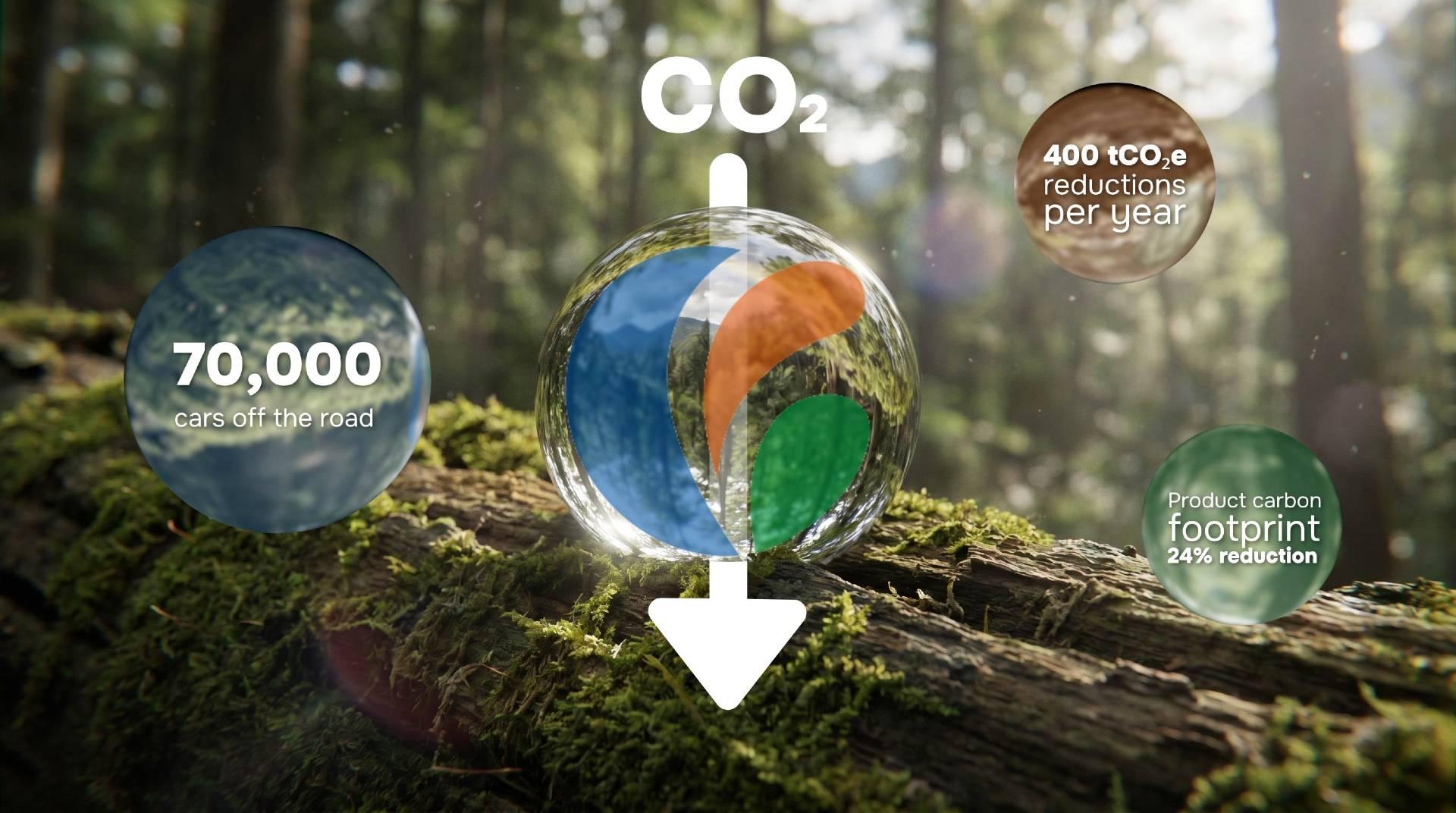
Since 2019, Futamura has delivered a cumulative carbon saving equivalent to removing ~70,000 cars from UK roads for an entire year. This figure represents avoided CO₂e emissions associated with lacquered (based on NatureFlex NVS) and plain film production between 2019 and 2025, calculated using IPCC AR6 GWP100 values from an independent third-party life cycle assessment from ERM*. This resulted in an average reduction of 24% of the carbon footprint of their NatureFlex films.
Major investments underway
Building on this success, additional major investments are now underway and scheduled for implementation by 2027/28. One example is the recently announced, internally known, Wet Sulphuric Acid (WSA) project. The installation will divert waste gases from the production process to generate a valuable raw material via an oxidation process. Heat generated as a byproduct of the chemical reaction will then be used to generate steam, the main form of energy utilised in the production process. Once operational, this asset will generate 15% of the total energy requirement of the Futamura site. These investments are projected to reduce Futamura’s CO₂e emissions even further, the equivalent to removing an additional ~4,000 cars from UK roads every year (based on 2025 production volumes). This represents another major step in reducing the carbon footprint of their products.
A key contributor to recent carbon reductions has been the investment in a new, high-performance compressed air system to strengthen their energy efficiency, reduce carbon emissions, and improve operational resilience. An independent air survey confirmed that this new system is outperforming expectations. To further enhance the sustainability, Futamura integrated a heat-recovery system utilising waste heat from the compressors to pre-heat their thermotanks, this reduces the steam required for the production process. The new system has proven highly dependable, with no major issues to date. These two improvements have delivered a substantial reduction in Futamura’s carbon emissions of over 400 tCO2e per year.
Beyond large-scale investments, Futamura has implemented a range of targeted energy efficiency initiatives across its site. In 2022, air conditioning units in the administration block were reprogrammed to operate only when needed and within controlled temperature limits. Ongoing lighting upgrades have replaced inefficient fluorescent systems with modern LED technology. These improvements have reduced both energy consumption and the number of fixtures required, while maintaining or improving lighting quality. Currently 80% of the site has been upgraded to LED lighting which have led to a notable decrease in energy usage, achieving full payback within the first year.
Energy monitoring
Futamura conducted energy monitoring in their laboratories which identified further opportunities for efficiency. Equipment such as ovens, previously operated continuously, are now used only when required. Weekend shutdowns and improved energy management practices have delivered a notable energy saving per year.
These combined efforts highlight Futamura’s holistic approach to sustainability, combining strategic investment, technological innovation, and operational discipline to achieve measurable environmental and economic benefits. Futamura remains committed to continuous improvement and to supporting its customers and partners in reducing environmental impact across the value chain.
Lucy Cowton, Futamura’s Sustainability Manager commented: “The reductions in our operational and product carbon footprints reflect the dedication of our workforce and their commitment to continuous improvement. We see this as just the beginning, with future investments, such as the WSA plant, expected to reduce our operational emissions even further. We are incredibly proud of the progress we are making.”
*The calculation is based on the difference in the carbon footprint between 2019 and 2025. Based on this, the actual amount of CO2e saved was ~100,000 tonnes.