

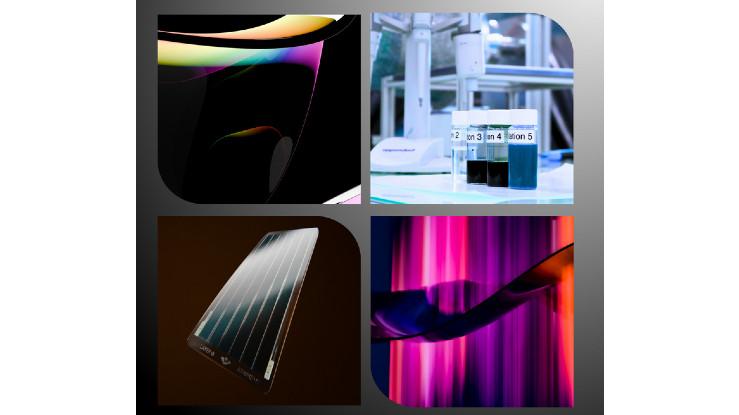
Dracula Technologies, a recognised leader in energy-harvesting solutions, has brought innovative energy-harvesting solutions to the IoT industry through its LAYER OPV technology, which efficiently harvests ambient light to eliminate the need for batteries.
With a proven track record in organic photovoltaic (OPV) technology, the company is now turning its attention to the vast potential of organic light-emitting diode (OLED) displays as well as flexible and organic electronics. By combining its expertise in sustainable, additive manufacturing processes with its cutting-edge organic materials, Dracula Technologies aims to contribute to these high-growth markets and is actively seeking strategic partners to develop its patented technology in these areas.
Recent advances in organic electronics research are also accelerating interest in multifunctional electronic surfaces that combine energy harvesting, sensing, and light emission. This growing convergence between OPV, OLED, and organic semiconductor technologies further reinforces the importance of scalable and sustainable manufacturing approaches for future electronic devices.
A proven foundation: From OPV to OLEDs
LAYER OPV technology represents the forefront of ultra-thin, flexible, and scalable energy harvesting solutions. Having demonstrated success in reducing environmental impact and ensuring scalability, Dracula Technologies is now exploring how these capabilities could support OLED displays and organic electronics.
OLED displays present significant opportunities in energy efficiency and flexible design, and Dracula Technologies is addressing key challenges such as material waste and scalability through its advanced additive manufacturing processes. These innovations could help support future energy-efficient, foldable, and lightweight OLED and organic electronic applications.
Brice Cruchon, CEO of Dracula Technologies, commented: “The potential is vast, and Dracula Technologies is excited about the opportunity to collaborate with like-minded companies to create the next generation of sustainable, flexible, and cost-efficient electronics. Our expertise in organic materials and sustainable manufacturing processes positions us at the forefront of this transformation, and we are eager to unlock new possibilities across multiple industries.”
The opportunity: Advancing ITO-free Organic Electronics
A critical development in organic electronics is the company’s approach to eliminating Indium Tin Oxide (ITO) from OLED displays. The objective is to introduce a fully ITO-free printable electrode formulation as an alternative to conventional ITO electrodes. Compatible with flexible substrates such as polyethylene terephthalate (PET) and polyethylene naphthalate (PEN), the technology can be processed under ambient conditions without vacuum manufacturing steps, while demonstrating excellent conductivity and mechanical flexibility.
Traditionally, ITO has been a major hurdle for scalability, environmental sustainability, and cost-efficiency. Dracula Technologies is developing this approach using organic materials to create conductive layers, providing an eco-friendly, flexible, and cost-effective alternative for future organic electronic devices. These advantages could pave the way for innovative applications in foldable displays, wearable devices, and medical sensors.
Looking ahead: Seeking strategic partnerships
Dracula Technologies is actively seeking partners to explore and develop its technology for the OLED and organic electronics markets. By leveraging its innovative IP and sustainable manufacturing processes, the company will open new avenues for growth in industries focused on advanced materials and energy-efficient solutions.