

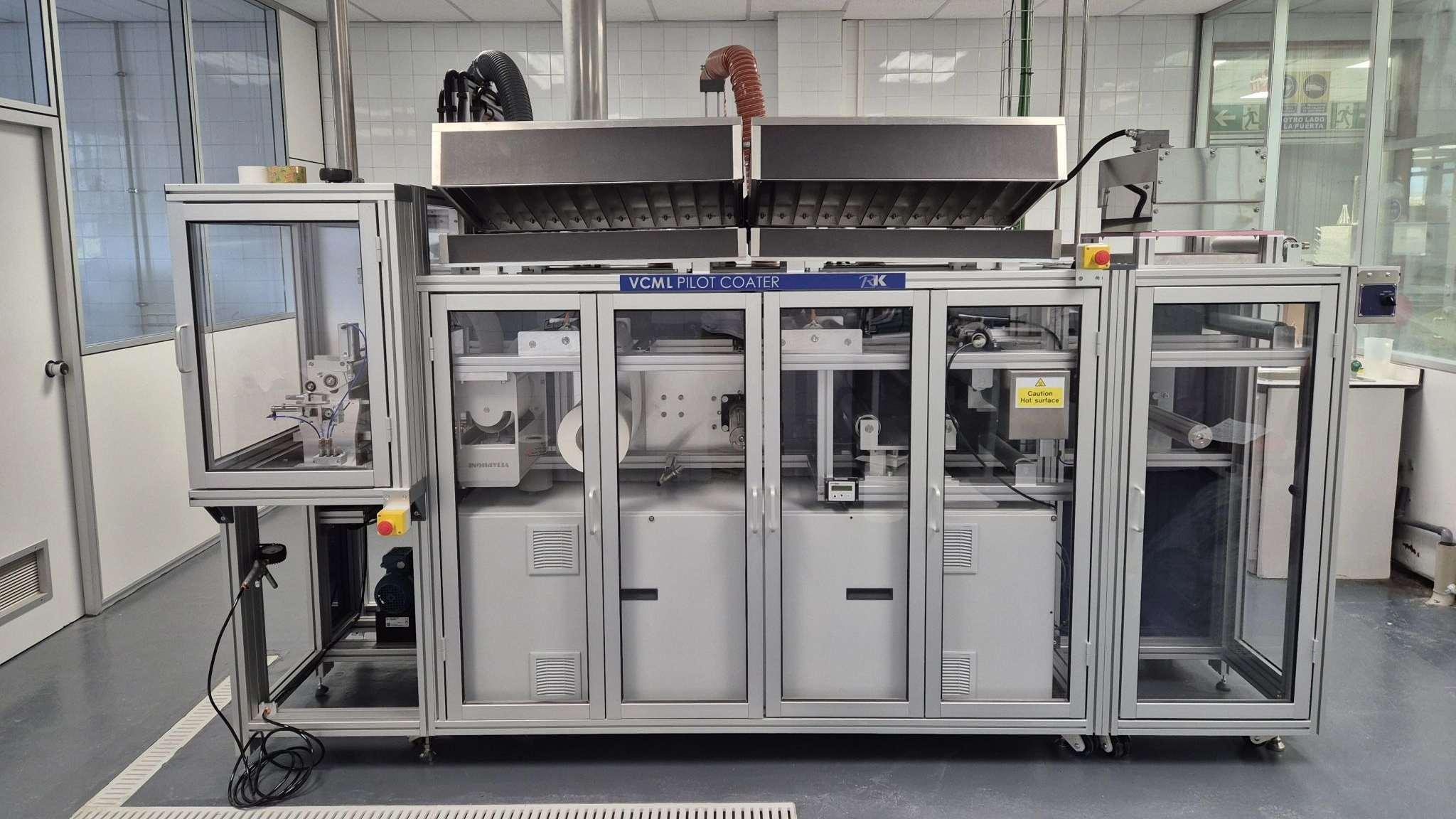
Speed of throughput, speed of delivery is critical, but so too is quality. Speed without quality is as harmful to the reputation of a converter as missed delivery. Judging whether coating or laminating is a success is very much dependent upon how well processing fundamentals are controlled as the moving web makes its way through the different zones of the machine. What we coat and then dry or cure are all of equal importance: they’re process quality interdependent.
Even when coating or converting seems to go well and rolled goods have been shipped, and responsibility for the goods seems over and done, that’s not always the case. Many web products, such as tapes and labels, are coated with an adhesive. In order to use them, they often need to meet conflicting requirements. To begin with, the layer containing the adhesive must peel easily from the unwinding roll.
Application requirements
However, application requirements dictate that the product sticks aggressively enough so that it cannot be removed from the matting surface. The adhesive may need to be tacky or at least not brittle at low temperatures, while having adequate shear strength at high temperatures. The adhesive must have a viscosity or viscosities that are compatible with one or more of the selected coating applicator technologies.
The unwinding, processing and winding up of rolls may seem straightforward, but this is not always so. Rolls of adhesive-coated materials might be wound with straight edges, but later these rolls may telescope sideways. Rolls that change shape, that telescope, do so primarily because layers are slipping and sliding. They may do this during winding and unwinding, or much later when stored or embarrassingly when with the customer.
While a good many products with high levels of interlaying friction are prone to slippage, even when they have a low co-efficient of friction, wound adhesive goods can be susceptible to telescoping. This can be due to variation in viscosity due to temperature changes or interlayer pressure, attributable in some instances to in-wound tension. When a reduction in tension on the rewind is needed for good reels, taper tension is applied.
Pilot/production bespoke coating systems, such as RK Print Coat Instruments VCM are equipped with high specification web handling and tension control systems and can be configured for closed loop load cell control and appropriate communicative technology, etc.
Coating or laminate layers and components must be optimised for the process. Heat-sensitive materials would best be avoided in a situation where elevated temperatures may arise either when additional processing is required or at the point of use.
Handle with care
Care needs to be exercised when drying and when selecting coating applicator technology. In some PS and other applications, thin coatings of low viscosity are applied, which sometimes present problems in achieving uniform coat weight. Thin coatings can be highly sensitive to being hit by dryer impingement air velocity. Where this is an issue, indirect air velocity impingement may be the answer, or another form of drying may be considered.
If the coated web is run through a dryer at high speed but at too low a drying temperature, poor adhesion is possible and even delamination of laminated products. Flexible substrates such as PE or PP may deform if the air is too hot or the dwell time is too long. Filmic materials may lose dimensional stability, resulting in wrinkles, shrinkage or polymer degradation. Modification to existing dryers is often necessary when running water-based inks and coatings. RK Print Coat Instruments has provided additional dryers for VCML pilot coaters engaged in coating flexible papers and films.
Care needs to be exercised when selecting coating technologies. The complexities of the coating formulation, the individual components and viscosities require different coating techniques and different coat weight thicknesses. All coating techniques offer advantages and disadvantages. Gravure may be a coating worth considering.
Gravure coating and its many variants such as direct, reverse and offset, deliver a pre-metered amount of coating onto a substrate. Coat thicknesses from as little as 2 microns up to 50 microns are obtainable.
Gravure is different
Gravure differs from other roll coating methods in that one of the rolls is patterned with a surface engraving. The shape and size of the pattern can be engineered so that a uniform and very accurate coating can be produced. Gravure printing differs from gravure coating in that it provides good resolution and sharp definition of print and good edge resolution.
The knife-over-roll method of coating is often favoured for pressure sensitive, water-based and barrier coating of materials for food and other product categories that require protection. Knife-over-roll is precise, efficient and cost-effective. It can coat a wide range of materials, including papers, filmic materials, textiles, non-woven and much more.
Of course, there are many other coating methods, such as slot die and meter bar; these and others, together with precise methods for controlling tension, such as load cell,s can be integrated with the customer’s bespoke VCM pilot/production coater and VCML lab/pilot coater.
Written by Tom Kerchiss, Chairman of RK Print Coat Instruments Ltd.