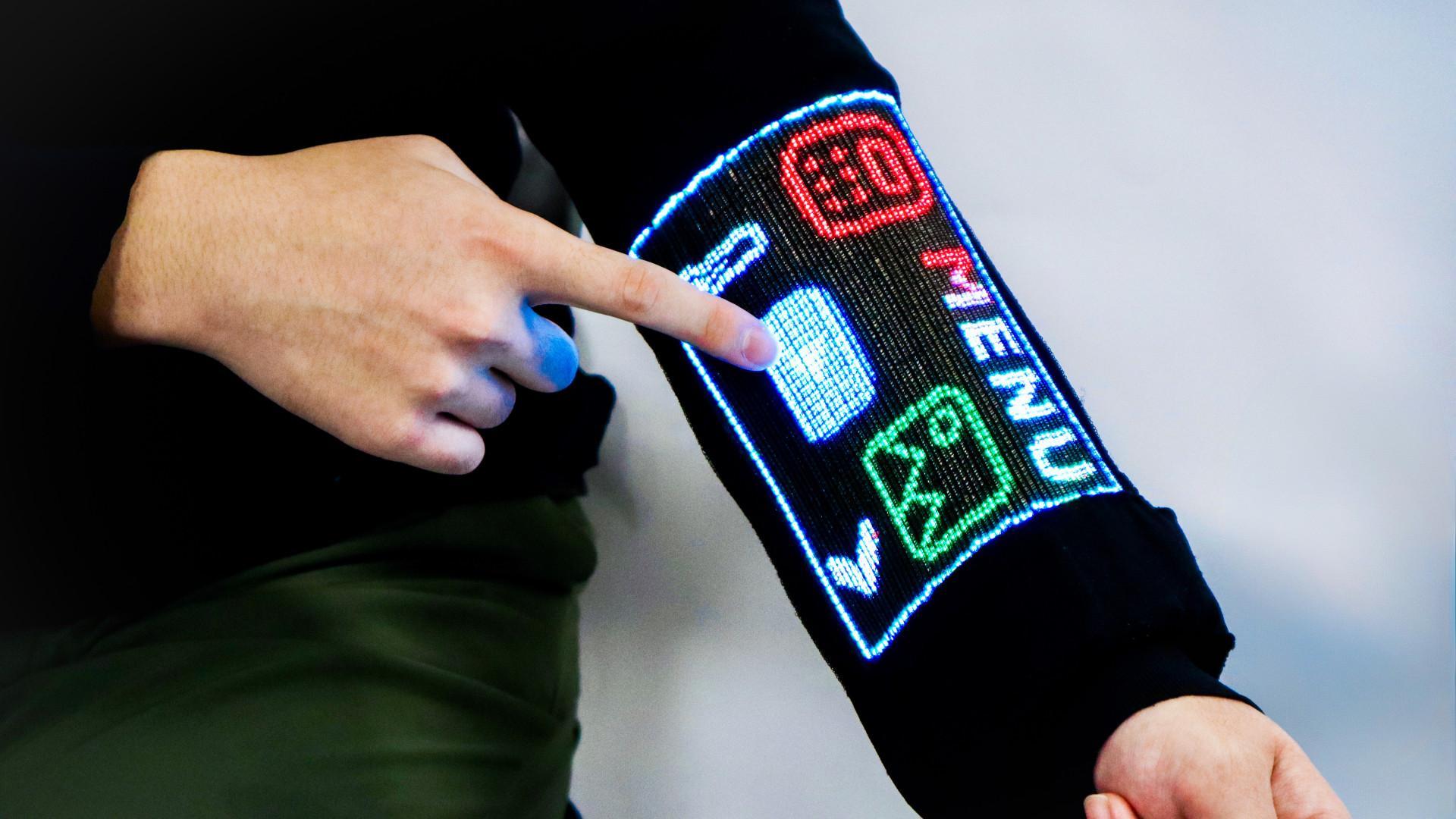
22 October 2026 highlightsImpactPress ReleasesResearch NUS researchers thread the world’s first touchscreen into a garment 2026 1022 Garment GUI 1 Asst Prof Tural Khudiyev (second from the right) from the College of Design and Engineering, NUS, with his team members Heng Fu, PhD student (first from the right), Ziang Li, PhD candidate (second from the left), and Swetika Chaturvedi, Research Associate (first from the left). Together, they have created the world’s first touchscreen integrated into a garment. The flexible, washable and breathable sleeve can display images and video, sense touch and connect wirelessly to digital devices. Researchers at the National University of Singapore’s College of Design and Engineering (CDE) have developed a fibre that functions as pixels and senses touch at the same time, integrating 54 of them into a sleeve to create the world’s first touchscreen built into a garment. The sleeve displays images and video, responds to finger presses and connects wirelessly to other devices, yet stays as washable, breathable and flexible as ordinary clothing. The team’s invention enables the creation of garments that act as a direct interface to a wearer’s health data and their digital devices, with no rigid screen involved. The screens that we are familiar with, such as those on phones and laptops, typically present graphical user interfaces (GUIs) on flat, rigid panels that display information and enable interaction. Textiles, woven from one-dimensional fibres, have never matched this capability. A full-colour, touch-sensitive display that can be threaded like yarn was, until now, out of reach. “What made this possible was our ability to construct the GUI system from electronic building blocks in fibre form — similar to traditional yarn, but with the sophisticated electronic functionality built directly into the fibres,” said Asst Prof Khudiyev. The team, led by Assistant Professor Tural Khudiyev from the Department of Materials Science and Engineering at CDE, published their findings in Nature on 21 October 2026. 2026 1022 Garment GUI 2 Using a novel interconnection architecture and thermal fibre drawing process that integrates thousands of microelectronic devices along a single fibre, the NUS team created touch-sensitive and pixel layers within a thread just one millimetre thick and 10 metres long. Interconnecting thousands of chips along a thread To build a fibre-enabled garment display, the NUS team developed a programmable method that creates connection points along tiny, insulated wires exactly where each microchip needs them. A laser exposes these locations, while controlled surface wetting guides molten solder to bond only at the programmed points. This enabled the team to integrate more than 5,000 chips through over 20,000 electrical connections. The strip of interconnected digital LEDs was then integrated into a multilayer fibre using a thermal drawing approach, which allows precise formation of the touch-sensitive and pixel layers within a thread just a millimetre thick and 10 metres long. A layer beneath the LEDs senses touch — pressing the fibre completes a circuit, and the signal reveals exactly where your finger landed so the nearest pixel lights up. “A fibre has a one-dimensional, axially symmetric geometry, which makes it difficult to build complex circuitry using approaches developed for conventional two-dimensional electronics,” added Asst Prof Khudiyev. “We overcame this limitation through a new interconnection architecture, which enables thousands of microelectronic devices to be integrated and interconnected along a fibre.” 2026 1022 Garment GUI 3 A layer beneath the LEDs senses touch, lighting up the nearest pixel when the fibre is pressed. Beyond the touchscreen: Wear your apps on your sleeve In the team’s prototype, 54 pixel fibres, each carrying 96 LEDs, were threaded into the forearm of a sleeve to form a 96 by 54-pixel display measuring 168 mm by 105 mm, refreshing 30 frames per second with 8-bit colour depth. Each fibre has its own control channel, so a fault in one line leaves its neighbours working normally, and the system can register several touches at once. Alongside the pixel fibres, the team integrated peripheral fibres made the same way, carrying a microphone, a speaker and sensors that track movement, find magnetic north, measure temperature and gauge how bright the surroundings are. Together, the fibres support the functions early generations of smartphones could perform: run a calculator, show a photo gallery, play a video at 30 frames per second (25 frames per second with synchronised audio), work as a compass, respond to voice commands, and receive images over Bluetooth. They can even rotate the screen and adjust brightness automatically. When positioned under the arm, the temperature-sensing fibre lets the sleeve read and display body temperature. Importantly, the garment still behaves like fabric. Light output and touch response were nearly unchanged after 50 detergent washes in a typical washing machine, and after 1,000 bends around a 5 mm radius. In addition, the built display is as breathable as cotton, polyester and denim, and stays within established safety limits for skin contact. 2026 1022 Garment GUI 4 The fibres support the functions early generations of smartphones could perform. The 96 by 54-pixel display can run a calculator, show a photo gallery, play a video, work as a compass, respond to voice commands, receive images over Bluetooth, as well as read and display body temperature.
2. November 2026

Research

NUS researchers thread world’s first touchscreen into a garment

Researchers at the National University of Singapore’s College of Design and Engineering (CDE) have developed a fibre that functions as pixels and senses touch at the same time, integrating 54 of them into a sleeve to create the world’s first touchscreen built into a garment. The sleeve displays images and video, responds to finger presses […]

Read more »
Feature

Voltera – Accelerating health tech and smart cities

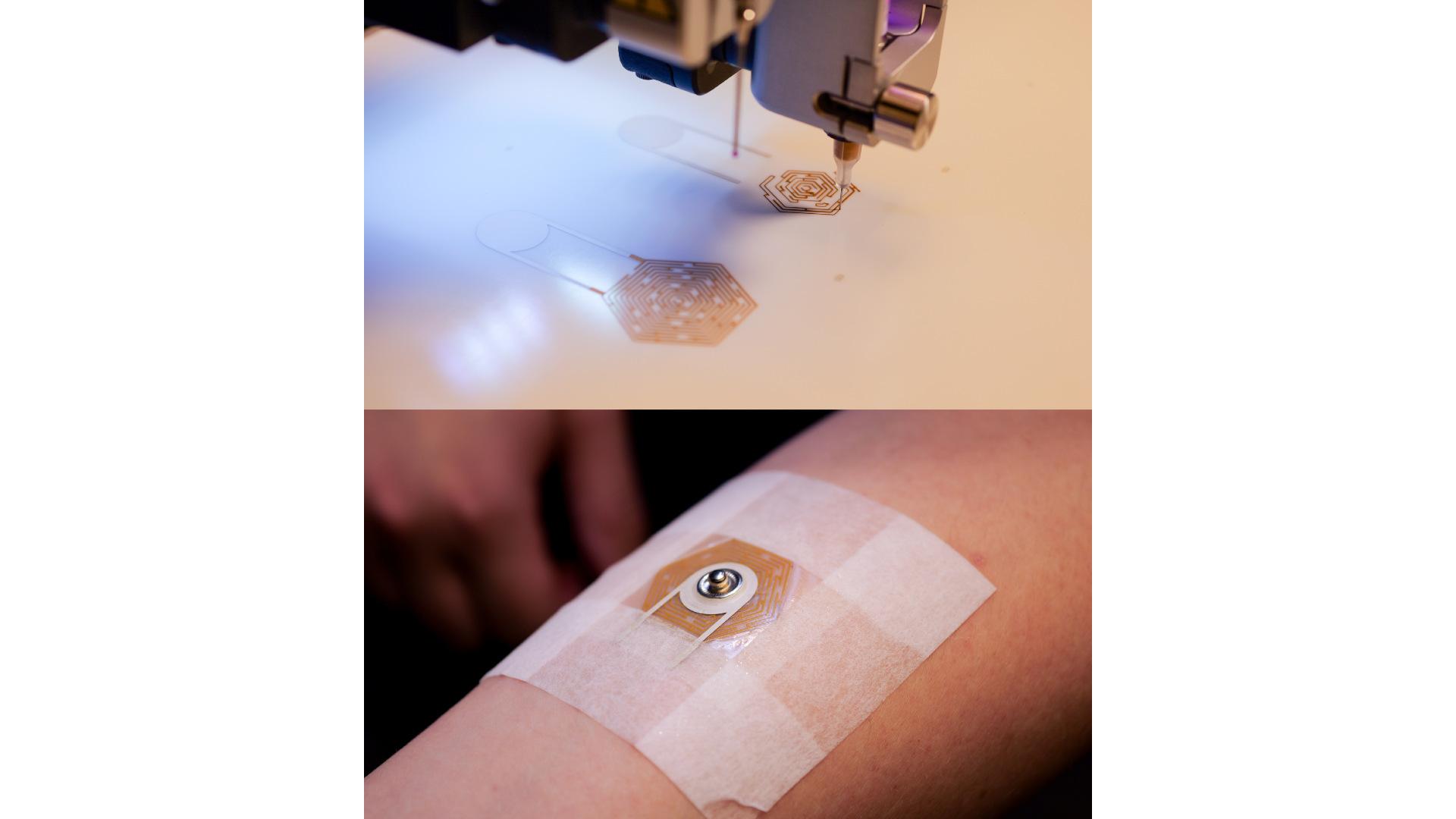
According to a market research report [1], the global wearable medical devices market is on pace to more than double from USD $103.1 billion in 2026 to USD $229.9 billion in 2033. Smart sensors, the backbone of connected city infrastructure, are tracking a similar curve, expected to climb from about USD $59.8 billion in 2026 […]

Read more »
Top: NOVA dispensing gold ink to make ECG electrodes. Bottom: One electrode conforming to a person's arm.
All News
29. October 2026 |

OE-A Spotlight

OE-A Business Climate Survey: Printed electronics focuses on growth and innovation

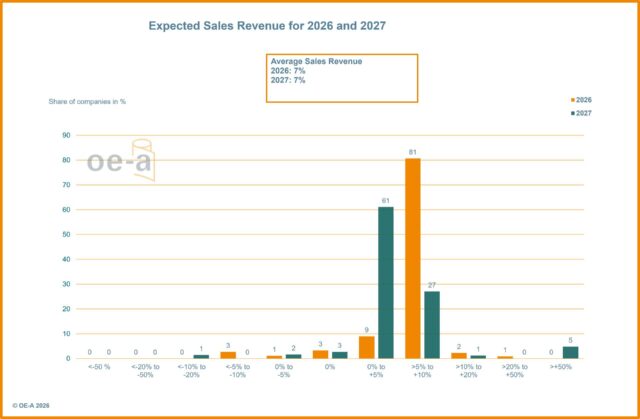
Despite ongoing economic and geopolitical uncertainties, companies in the flexible and printed electronics industry remain cautiously optimistic about future developments. The latest OE-A Business Climate Survey confirms expected sales growth of 7 percent for 2026. For 2027, the companies surveyed also expect average sales growth of 7 percent. The biannual survey is conducted by the […]

Read more »
28. October 2026 |

Companies & Markets

OLEDWorks & Audi celebrate 10 years of lighting in production vehicles

Audi and OLEDWorks marked 10 years of organic light emitting diode (OLED) lighting in production vehicles at an event hosted by Audi in Ingolstadt on 15 October 2026. The gathering brought together pioneers, engineers, designers, and industry leaders who helped develop OLED from an emerging technology into an established platform for automotive lighting. The celebration […]

Read more »
27. October 2026 |

Image Gallery

People of TechBlick Berlin 2026

Image source: Nina Pirchmoser/Steffen Robens

Read more »
27. October 2026 |

Research

KAIST predicts the lifetime of blue OLEDs

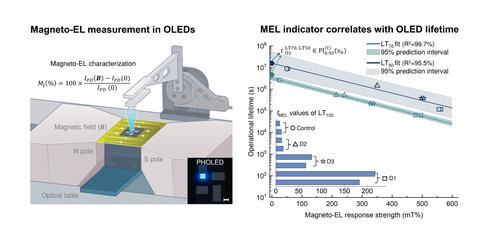
KAIST, Kyung Hee University, Hanbat National University, and ASTA Inc. identify a relationship between the magnetic field response and the operational lifetime of blue OLEDs. Could a magnetic field be used to identify in advance which OLEDs will keep smartphone and TV screens bright the longest? A KAIST research team has developed a technique that […]

Read more »
26. October 2026 |

Companies & Markets

LC Elektronik – The sensor is becoming a surface

What does it change for product designers?  A few years ago, when someone asked me about a sensor, I would probably imagine a small electronic component. Something mounted on a PCB, connected by a cable or hidden inside a plastic housing. Nothing particularly exciting. Sensors have been part of our products for decades, and most […]

Read more »
To top